(River Tay weekly report week ending 21st February 2026)
It was a more settled start to last week, weatherwise, with the river at a good height. This was a welcome change, as it felt like there had been so much rain in recent weeks, especially across eastern Scotland. This has led to frequent lifts in water, making it far from ideal fishing conditions. There was actually very little rainfall during the first half of the week, although it was cold with harsh night time frosts. As we moved towards the end of the week, there were some showers, longer spells of rain, and it did become a little milder. On Friday, the river began to rise due to melting snow and some rain. If the weather forecast is to be believed, then the milder weather is set to continue into next week.
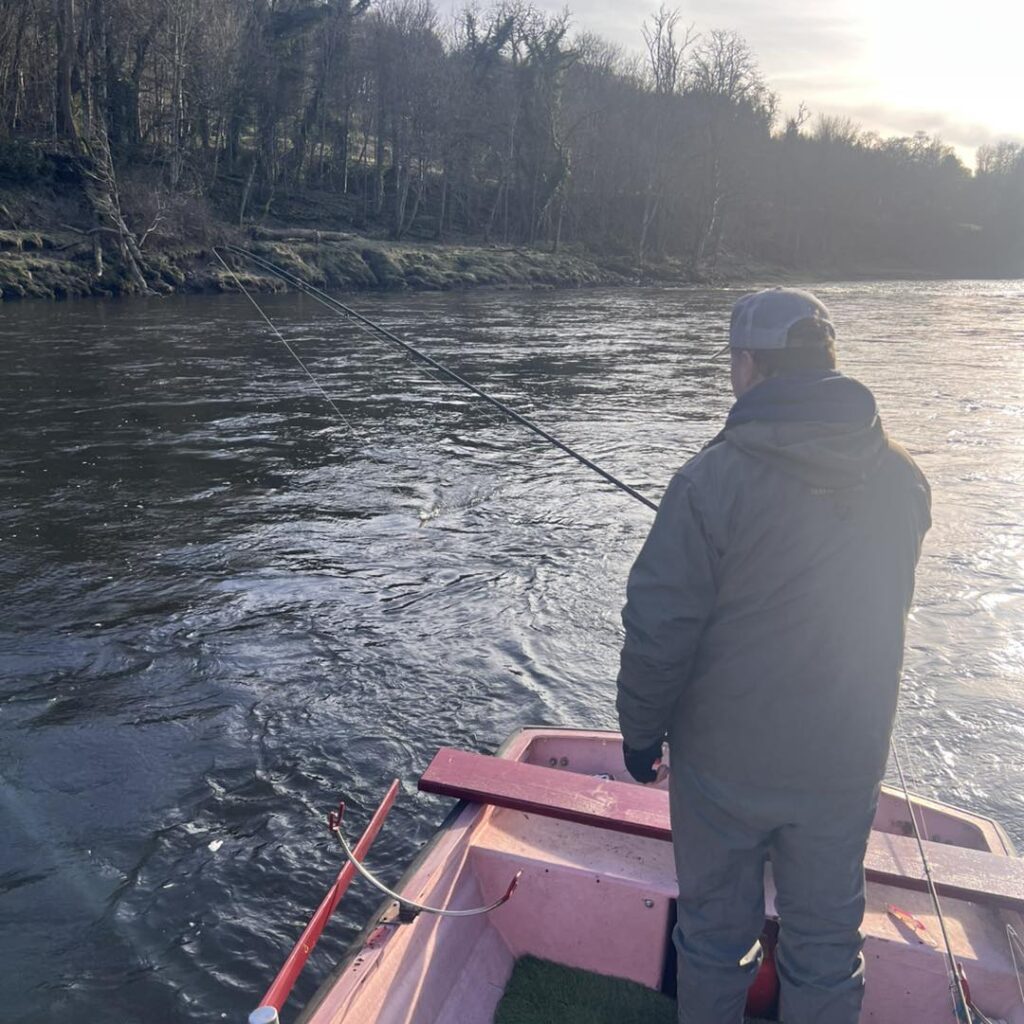
Overall, conditions were quite decent for much of last week, with the weather ok for mid-February. Bearing that in mind, you would have to say that catches were a little disappointing but fishing pressure was light for much of last week. However, a few nice fish were caught from the Tay system, which was good to see and hopefully catches will improve as we move towards the end of February and into March. Over the past few weeks, it has been the lower river beats that have produced the majority of the fish. Both the Stobhall and Taymount beats have enjoyed some consistent sport so far this season, which would seem to indicate that some of the fresh fish running the system are slowing down around the famous Linn Pool area before making their way upstream. This is not unusual at this time of year, especially if the water is high and cold.

On the middle river Mr Mike Elgie was fishing at Delvine & Burnbane on Saturday when he got a powerful take in the boat. From the outset, it was clear that he had hooked a decent fish. After a great fight Mr Elgie went on to land a magnificent twenty pounder. This was the first fish of the season at Delvine. What a fish to get off the mark!
There was more success at Stobhall last week, where on Tuesday, a fine nine pounder was landed. On Thursday, a lovely fifteen pounder was caught from the beat. There was a fine brace caught at Taymount on Friday, with the biggest fish landed weighing fourteen pounds. It was great to see the Burnmouth Beat get off the mark for the 2025 season on Thursday.

Mr. Alistair Dunbar was fly fishing the Woodside on the Catholes Beat on Friday when he got a powerful take. After a good fight, which included a number of powerful runs Mr Dunbar went on to land a magnificent nine pounder. The sparkling springer was sea liced and in perfect condition, which was great to see. The first fish of the season was caught from Upper Scone Beat on Thursday, hopefully the first of many. The lovely springer was landed from the Pitlochrie Pool.
Away from the fishing, there was some really worrying news last week. There was a diesel spill on the River Dochart on Thursday. Reports suggested that the source of the spill was from a local filling station. This has the potential to cause a massive, devastating environmental impact on the entire Tay system. The relevant authorities have been notified, including SEPA and also Perth & Kinross Council. By Saturday morning, there were signs of diesel in the water as far downstream as the middle Tay by Dunkeld. We just have to keep our fingers crossed and hope that the agencies involved come up with a plan that will minimise any potential damage.

We would like to thank all the ghillies and beat owners on the River Tay system who have contributed to this report by providing their time and information, as the weekly report would not be possible without your help and support. If you would like to share any interesting stories or pictures from your time fishing on the River Tay for the purposes of this report, please feel free to contact us at info@salmonfishingholidaysscotland.com
Good luck to all those anglers fishing on the River Tay next week.
Tight lines,
Samantha & Sandy Datta
Beat catches reported
(week ending 21st February)
SALMON & GRILSE: Delvine & Burnbane 1, Stobhall 2, Taymount 2, Burnmouth 1, Catholes 1, Upper Scone 1
Total: 8 Largest: Delvine & Burnbane 20lbs
MILDER WEATHER IN THE DAYS AHEAD?
(River Tay salmon fishing prospects week commencing 23rd February 2026)
The weather last week was a little more conducive to salmon fishing, which was a welcome relief for anglers. During the first half of the week, there was very little rainfall and the river was running at a decent height for many beats. As the week progressed, there were some showers, longer spells of rain, and it also felt milder. The river started to rise on Friday due to a combination of rain and some melting snow.
Over the weekend, there was some rain on Saturday with showers on Sunday. Looking ahead to next week, it is set to get milder with temperatures in the high single figures or even low double figures. Monday and Tuesday should be mainly dry apart from the odd shower. Wednesday is likely to be quite unsettled with showers or even some longer spells of rain. The unsettled theme is likely to continue as we move towards next weekend.
Most of the fish caught last week were on beats situated on the lower river. However, with milder conditions forecast, it is likely that more fish will start to run into the middle river, and hopefully, beats in this area should start to pick up a few springers on a more consistent basis.
Good luck to all those anglers fishing on the River Tay next week.
Tight lines,
Samantha & Sandy Datta
Tactics for the River Tay during the early spring period (January-March)
The ghillies on the River Tay are all highly experienced and have an intimate knowledge of their beats. Their advice and guidance are key to success. Please get in touch with your ghillie for up to date advice on tactics and what tackle to bring before visiting the River Tay.
Fly Fishing
During the early spring months, water temperatures are often low and river levels are high. In such conditions, the depth at which your fly moves through the water column can be the key to success. Often you may be required to use floating lines coupled with sinking polyleaders, intermediate or even full sinking lines. It is therefore important that you have a fly rod that can work in harmony with a heavy line. As the Tay is a big river, a powerful fifteen-foot rod with a ten-line rating usually covers almost any eventuality.
In terms of lines, whether a full Spey line or Shooting head system, a floating line coupled with a selection of polyleaders of various sink rates can work well. An intermediate or full sinking line may be required in higher water to produce the best results.
Make sure that your fly reel has an adequate backing capacity and a good, reliable drag system. On the River Tay, when that line tightens, the fish could turn out to be that one of a lifetime. It is also important to use leader material with an adequate breaking strain during the early spring period. Usually, a breaking strain between fifteen and eighteen pounds is ideal.
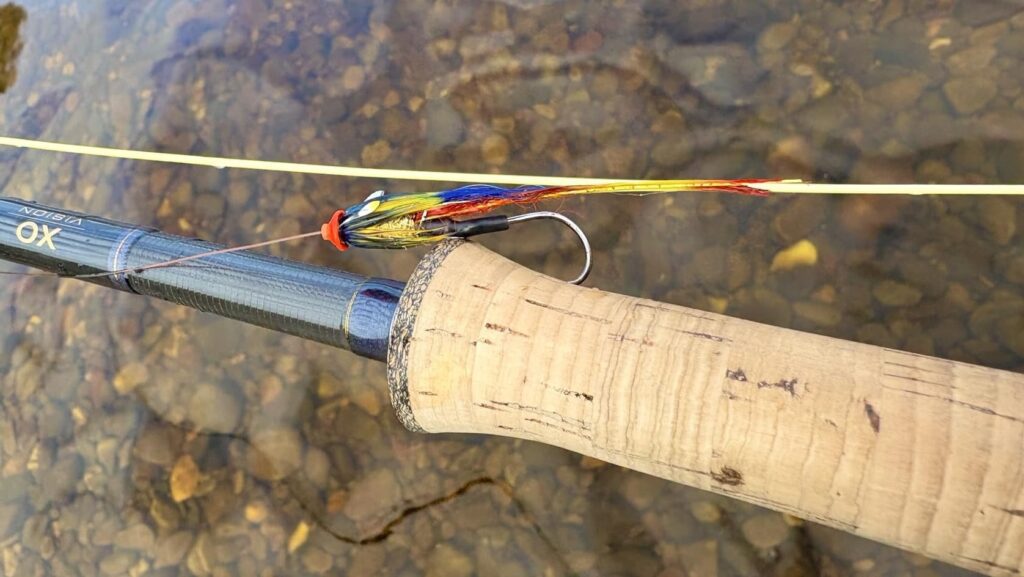
During the early part of the season, tube flies often work well. If the water temperatures are low, weighted copper, brass, or even tungsten tubes of a decent length will allow your fly to get well down and close to where the fish will likely be lying. In cold weather, the fish are unlikely to be keen on moving fast, so it is better that your fly moves through the water column at an adequate depth and not too quickly.
Spinning
A powerful spinning rod between ten and eleven foot is usually more than adequate to cover the River Tay. The rod should be able to cast lures comfortably, weighing anything from eighteen to forty grams. A good fixed spool or multiplier reel with a reliable drag system is perfect for the River Tay. The reel should be able to accommodate a large amount of either nylon or braided line with an adequate breaking strain.
In terms of lures, spoons like the Toby, Salmo Toby and Blair variety work well on the river. These can range in weight from eighteen to forty grams. Devon Minnows can also be effective on the River Tay during the early spring months. Vision 110s and Rapalas are also lures that are well worth considering.
Harling
Harling is a method unique to the River Tay, which involves fishing from a motorised boat. This method is employed on many beats and can be highly effective during the early spring months.
Usually, two or three rods are placed in rod holders with various lures, and then the ghillie skilfully combs the water by moving back and forth in the boat whilst gradually dropping downstream, covering the likely lies on the beat. Harling is a method that is very much dependent on water height and is practiced at the beat ghillies’ discretion.
TDSFB conservation policy
All anglers fishing on the River Tay system are reminded that the TDSFB’s policy from January 15th to 1st of April is that all spring salmon must be released. This means that the TDSFB has a 100% mandatory catch & release policy for all salmon caught. This is in line with the Scottish Government Statutory Conservation Regulation. Even if the fish dies, it must still be returned to the river.
It is also worth remembering when releasing fish to keep them in the water for as long as possible and use minimal handling. Please also give the fish plenty of time to recover before releasing them. Anglers must treat their quarry with the utmost respect at all times.